

Why Manufacturers Are Replacing Welding
with Clinching Technology
Using the Bollhoff RIVCLINCH® System

For decades, welding has been a common method for joining sheet metal components. Although it remains effective in many applications, manufacturers are increasingly seeking alternatives that lower costs, simplify assembly, and improve efficiency. Clinching is one technology gaining attention across a range of manufacturing industries. Rivet Nut USA™, a division of Cardinal Components, Inc., is the premier distributor of the Bollhoff RIVCLINCH® line, which includes three clinching systems.
Unlike welding, which relies on heat to fuse materials together, clinching is a cold-forming process that creates a strong mechanical interlock between metal layers. The process reduces many of the challenges commonly associated with welding while delivering reliable, repeatable joint performance.
One of the primary advantages of replacing welding with clinching is the absence of heat. Welding can cause material distortion, discoloration, and damage to protective coatings or finished surfaces. Additional post-weld processing may be required to restore appearance or corrosion resistance. Because clinching is a cold-forming process, it helps preserve the material’s original properties and surface finish when properly installed. Clinching the material instead of welding reduces the need for follow-up procedures on the original finish. With clinching, manufacturers can join coated, painted, galvanized, stainless steel, and aluminum components. As lightweight materials and pre-finished metals become more common in modern product designs, preserving those finishes throughout the assembly process becomes increasingly important.
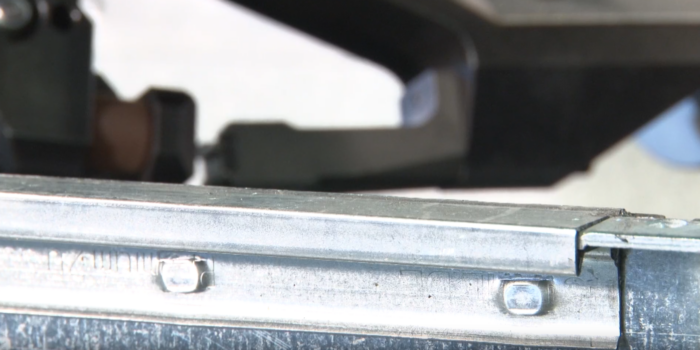 Manufacturers are also turning to clinching to improve production efficiency. Welding often requires skilled labor, extensive setup, and ongoing equipment maintenance. Clinching is a fast, repeatable process that can be integrated into both manual workstations and automated production lines. With the help of a clinching system like RIVCLINCH®, manufacturers can generate higher output, greater consistency, and reduced production bottlenecks.
Energy consumption is another important consideration. Welding operations require significant electrical power and can generate sparks, fumes, and heat. Clinching offers a cleaner, more energy-efficient alternative that supports lean manufacturing initiatives while creating a safer and more comfortable work environment.
For many manufacturers, the greatest benefit is cost reduction. By eliminating filler materials, minimizing secondary finishing operations, reducing rework, and streamlining assembly, clinching can significantly lower the total cost of production. These advantages become especially valuable in high-volume manufacturing environments where even small process improvements can generate substantial savings.
Today, industries including HVAC, appliance manufacturing, automotive production, electrical enclosures, construction products, and general sheet metal fabrication are incorporating clinching technology into their operations. Its combination of speed, consistency, and efficiency makes it a practical alternative for a wide range of sheet metal joining applications.
While welding remains important in manufacturing, it is not always the most efficient joining method. Clinching technology, including the Boellhoff RIVCLINCH® system, provides a modern approach to sheet metal assembly that helps manufacturers reduce costs, increase productivity, and maintain the high-quality standards their customers expect.
For more information on using Böllhoff RIVCLINCH®, Visit Our RIVCLINCH® Product Page or Read Our Article: What is Bollhoff RIVCLINCH®?